Where Can Heavy Equipment Park Legally?
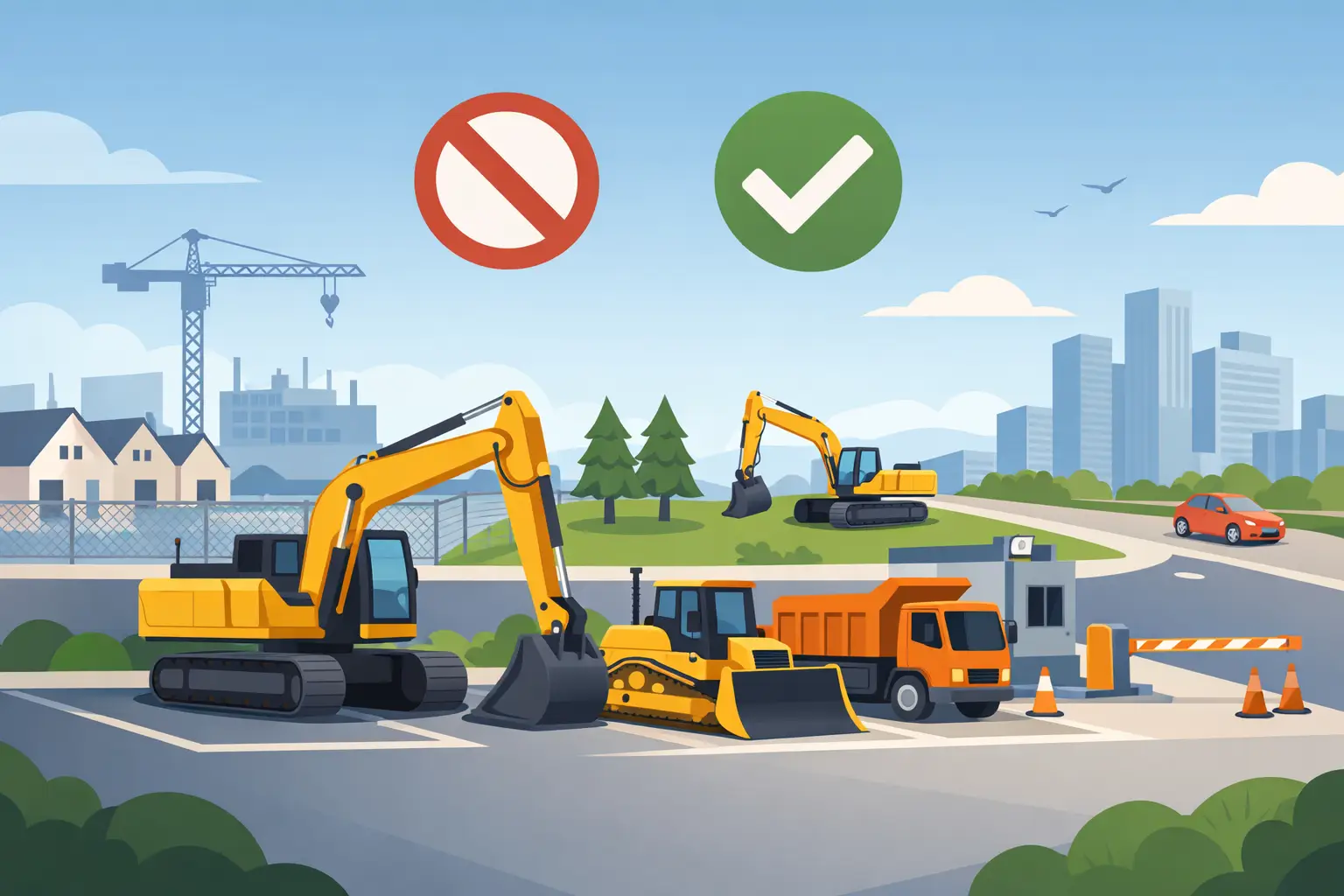
If you are asking where can heavy equipment park, you are usually already dealing with a real problem - a job wrapped up late, a machine that cannot stay on-site, or a trailer loaded with equipment that cannot sit in a standard lot overnight. For contractors, owner-operators, and fleet managers, bad parking choices create risk fast. Theft, citations, damage, access delays, and property disputes all start with parking equipment in the wrong place.
The short answer is simple. Heavy equipment should park in a property built or approved for oversized commercial vehicles and machinery. That usually means a dedicated truck and equipment parking facility, a contractor yard, an industrial storage lot, or a jobsite with clear authorization. What does not work well is guessing. An empty-looking retail lot, side street, vacant field, or self-storage site that was never designed for machinery can create expensive problems.
Where can heavy equipment park without trouble?
The best parking option depends on how long the equipment will stay, how often you need access, and whether it is self-propelled equipment, hauled equipment, or equipment sitting on a trailer. In most cases, the safest answer is a secure commercial parking lot set up for large vehicles.
A dedicated truck and equipment parking facility is usually the most practical choice for drivers and operators who need dependable access. These sites are designed around oversized dimensions, turning room, and security. They also tend to be easier to reach from major highways, which matters if you are moving in and out on a tight schedule.
An industrial yard can also work, but only if the owner allows equipment storage and the layout actually fits your machine. Some industrial properties look suitable from the road but have poor surface conditions, narrow entries, or limited maneuvering space. If you cannot enter, back, and exit cleanly, the site is not a real option.
Jobsites are another possibility, but only when the contractor, property owner, or site supervisor has approved after-hours storage. Even then, it depends on local rules, insurance requirements, and site security. A machine left at a jobsite may be convenient, but convenience does not always mean protection.
What makes a parking site right for heavy equipment?
Not every lot that accepts trucks is right for machinery. Heavy equipment has different demands than a standard commercial vehicle. Weight, width, loading method, ground pressure, and attachment size all matter.
The first thing to check is surface stability. Gravel, compacted base, or paved areas may work, but the ground has to support the equipment without rutting, shifting, or creating a recovery problem after rain. A soft lot can turn one parked machine into a towing bill, a damaged undercarriage, or a delayed dispatch.
Next is space. You need room not just to fit the unit, but to maneuver it safely. That includes approach angle, turning radius, trailer swing, and clearance for lowboys, flatbeds, or detachable goosenecks. A site that technically has an open spot may still be unusable if the entrance is too tight or the aisle layout forces awkward backing.
Security matters just as much as size. Heavy equipment is high-value property, and attachments, batteries, fuel, and tools are common targets. A proper site should have controlled access, perimeter protection, lighting, and visible surveillance. If a lot is open to anyone at any hour without oversight, you are taking on more risk than most operators want.
Access hours are another detail people overlook until it becomes a problem. Some storage sites lock down at night or restrict weekend entry. That may be fine for seasonal storage, but not for working equipment. If you need to move before daylight or return after a late run, 24/7 access is a real operational requirement, not a bonus.
Where heavy equipment should not park
This is where many equipment owners get burned. A machine parked in the wrong place may seem fine for a few hours, but local enforcement, property owners, or security staff can step in quickly.
Retail parking lots are a common mistake. Even if the lot looks half empty, those spaces are built for customers, not dozers, excavators, skid steers on trailers, or oversized trucks. Property managers may tow, issue warnings, or involve law enforcement.
Residential streets are another bad option in most cases. Even where local rules are not immediately obvious, oversized commercial equipment parked in residential areas tends to draw complaints fast. Noise, blocked sightlines, road wear, and neighborhood restrictions all work against you.
Vacant land is risky too. Just because a parcel looks unused does not mean it is legal to enter or store equipment there. Trespass issues, mud, hidden grade problems, and zero security make informal parking a poor bet.
Standard self-storage properties also do not always work. Some can handle trailers or work trucks, but many have size limits, access restrictions, or lease terms that rule out heavy machinery. It depends on the site, and that is exactly why checking first matters.
How to choose the best place in Gainesville
If you need heavy equipment parking in or around Gainesville, start with the basics. Can the lot handle the dimensions and weight of your equipment? Can you get in and out without wasting time? Is the property secure enough for overnight or long-term storage? And can you access your unit when your schedule demands it?
For local operators and drivers passing through the corridor, highway access should be part of the decision. A secure lot loses value if getting there means fighting narrow roads, low clearances, or unnecessary local traffic. A good parking site saves time on both ends of the stop.
It also helps to think about how long the equipment will stay. Short-term parking often needs fast entry, straightforward reservations, and simple in-and-out use. Long-term storage puts more weight on security, site condition, and cost control. One lot may be strong for overnight parking but less practical for a unit you need to check regularly.
Truck Parking Gainesville fits this need because it is built around oversized commercial parking, not general storage. That matters when you are trying to protect valuable equipment, keep access simple, and avoid the guesswork that comes with parking wherever space happens to be available.
Questions to ask before you park heavy equipment
Before committing to any site, confirm the details that affect day-to-day use. Ask whether the property accepts your specific equipment type and dimensions. A lot may welcome trucks but not certain machinery or loaded trailers.
Ask about security measures in plain terms. Is there gated entry? Is the site lit? Are cameras in place? Can unauthorized vehicles enter the property easily? You are not looking for vague reassurances. You are looking for signs that the facility was set up with asset protection in mind.
You should also confirm access policy, reservation process, and any limits on staging, unloading, or attachment storage. These details matter more than people expect. A parking arrangement only works if the site supports the way you actually operate.
Why dedicated parking usually costs less than the wrong option
Some operators try to save money by using improvised parking. On paper, that can look cheaper. In practice, it often costs more.
One citation, tow, vandalism incident, or theft claim wipes out any savings fast. The same goes for wasted driver time hunting for a spot or returning to a site that is blocked, locked, or unsuitable after dark. Reliable parking has a price, but so does uncertainty.
That is why dedicated equipment parking is usually the better business decision. You are paying for security, access, and a site that is actually designed for the size and value of what you are storing. For working equipment, that is not an extra. It is part of protecting uptime.
If you need an answer to where can heavy equipment park, the best answer is a secure, equipment-ready lot where your machine can sit legally, safely, and be ready when you need it again. Good parking should make the next move easier, not create the next problem.