What Makes a Parking Lot Secure?
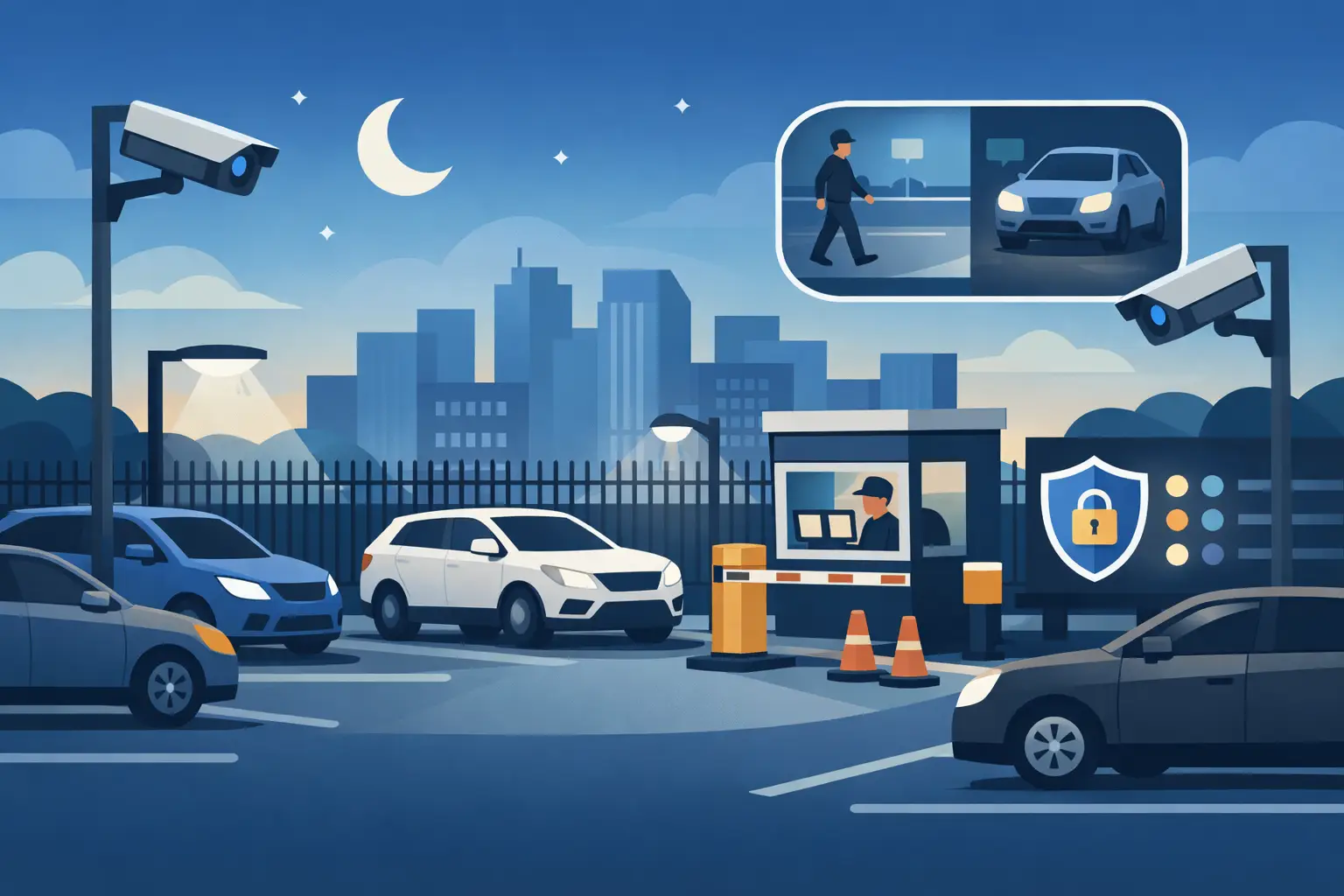
A truck parked overnight is more than a vehicle sitting still. It is freight capacity, work scheduled for tomorrow, and money tied up in equipment that cannot afford to disappear or get damaged. That is why drivers and fleet owners keep asking what makes parking lot secure enough for trucks, trailers, and heavy equipment in the real world, not just on paper.
The short answer is this: a secure parking lot combines controlled access, clear visibility, active monitoring, and a layout built for commercial vehicles. If one of those pieces is weak, the whole lot is weaker than it looks. A chain-link fence alone does not make a property secure. Neither does a camera mounted on a pole if nobody can see the footage or respond when something happens.
What makes a parking lot secure for commercial vehicles
Security starts at the perimeter. If anyone can enter the lot at any time without being seen, tracked, or slowed down, the site has a basic weakness. A secure lot uses gated entry to control who comes in and out. That sounds simple, but the details matter. Gates should work consistently, close fully, and support a system that limits access to authorized users.
For truck parking, controlled entry matters even more than it does for a standard passenger vehicle lot. Commercial vehicles, flatbeds, dry vans, reefer trailers, and machinery represent higher-value targets. They also take up more space and are harder to move discreetly once they are parked, so theft attempts often focus on cargo access, fuel theft, battery theft, and vandalism rather than driving the whole unit away. A secure lot is designed with those risks in mind.
Lighting is the next major factor. Good lighting does two jobs at once. First, it helps drivers move safely through the property during early morning arrivals, late-night parking, and poor weather. Second, it removes hiding places and improves camera coverage. A dark corner in a truck lot is not a minor issue. It is an invitation for tampering, cut seals, broken locks, and damage that may not be noticed until the next dispatch.
Surveillance also needs to be more than decorative. Cameras should cover entry points, drive lanes, and parking rows with enough clarity to actually identify activity. Wide shots alone are not enough. If a camera system records blurry footage that cannot capture a plate, a trailer number, or a person approaching equipment, it does not offer much practical value. Good surveillance supports accountability. It tells people they are being watched, and it creates a record if something goes wrong.
The security features that matter most
When people ask what makes parking lot secure, they usually focus on visible hardware. Gates, fences, lights, and cameras absolutely matter. But security is not just a list of equipment. It is how the property operates day to day.
A lot with 24/7 access can still be secure if access is controlled properly. In fact, for truck drivers, around-the-clock access is often necessary. Freight schedules do not stop at 5 p.m., and equipment operators may need to retrieve a trailer or machine before sunrise. The trade-off is that open access hours should not mean open access to the public. The best lots balance convenience with control.
Fencing remains important because it defines the property and creates a physical barrier. Still, not all fencing offers the same level of protection. A perimeter fence works best when it is paired with controlled gates, good lighting near the edges, and enough visibility that suspicious activity can be seen quickly. A fence hidden behind brush or dark areas loses much of its value.
Lot design is another factor drivers notice right away. A secure site is usually organized, not crowded and improvised. Clear drive lanes, marked parking areas, and enough turning room for large units reduce accidental damage and help staff or cameras maintain sightlines across the property. If trailers are packed too tightly or parked in confusing rows, security drops because visibility drops.
Surface condition matters too. A well-maintained lot is easier to patrol, easier to light, and easier for drivers to inspect around their vehicle. Mud, standing water, broken pavement, and overgrown edges create blind spots and make routine checks harder. That may sound like maintenance rather than security, but in truck parking the two are closely connected.
Why visibility matters as much as barriers
A parking lot can be technically enclosed and still feel unsafe. That usually comes down to visibility. Drivers want to be able to see where they are backing, walking, and parking. Just as important, they want a site where other people can be seen.
Criminal activity tends to favor hidden areas, poor lighting, blocked lines of sight, and properties where no one is quite sure who belongs there. A secure lot reduces those opportunities. Open sightlines, bright lighting, and visible camera placement create pressure against theft and tampering. People are less likely to test a property when they know they will be exposed.
This is one reason dedicated commercial parking often beats improvised storage spots. A general-use lot or random yard may have space, but it may not be set up for trucks. If the property was not built for long trailers, tractors, or equipment, the layout often creates dark corners, awkward staging, and blind areas between parked units. That is not just inconvenient. It increases risk.
What makes a parking lot secure beyond equipment
The strongest lots do not rely on hardware alone. They also rely on consistent operating standards. That includes keeping access systems active, repairing damaged fencing quickly, replacing failed lights, and making sure cameras are positioned and functioning properly. Security breaks down fast when basic upkeep slips.
There is also a difference between a lot that looks secure and a lot that is managed securely. A clean, professional property sends a message that the site is monitored and taken seriously. An unmanaged-looking lot sends the opposite message. Drivers notice this immediately, and so do the wrong people.
For commercial users, suitability is part of security. If a lot is too tight for your rig, too soft for your equipment, or too restricted for after-hours access, you may end up parking in a way that exposes your vehicle to more risk. A secure parking lot for trucks needs enough room for oversized vehicles to enter, maneuver, park, and exit without unnecessary difficulty.
That is especially true for trailer owners and equipment operators. Storage security is not only about stopping outside threats. It is also about reducing preventable damage caused by bad spacing, poor surfaces, or awkward vehicle movement. A lot can have a gate and still cost you money if your equipment is hard to position safely.
How drivers can judge whether a lot is actually secure
Most drivers can size up a property in a few minutes. Start with the entrance. Is access controlled, or can anyone roll in behind another vehicle? Look at the fence line and perimeter. Check whether lighting covers the lot evenly or leaves dark zones. Notice whether cameras are visible in useful places, not just mounted for show.
Then look at the layout. Is there enough room for trucks and trailers, or does the place feel like it was adapted from a smaller vehicle lot? Can you see across the property clearly? Does the site look maintained, or does it look neglected? Those details tell you a lot about how seriously the operator treats security.
It also helps to think about your own use case. A driver needing overnight truck parking may care most about entry control, lighting, and easy in-and-out access. A fleet storing trailers for longer periods may put more weight on surveillance coverage, perimeter protection, and lot management. An equipment owner may need stable ground, width, and space that prevents accidental contact between machines. Security is not one-size-fits-all. It depends on what you are parking and how long it will stay there.
For truck owners and operators in North Texas, that practical standard matters more than marketing language. A truly secure lot should let you park, lock up, and leave without wondering whether your truck, trailer, or equipment will still be in good shape when you return. At Truck Parking Gainesville, that is the level commercial users should expect from any facility they trust with valuable assets.
If you are comparing parking options, do not stop at price or location. Look at the gate, the lighting, the cameras, the layout, and whether the site is clearly built for commercial vehicles. Real security is visible before you ever shut off the engine.