Trailer Parking Versus Self Storage
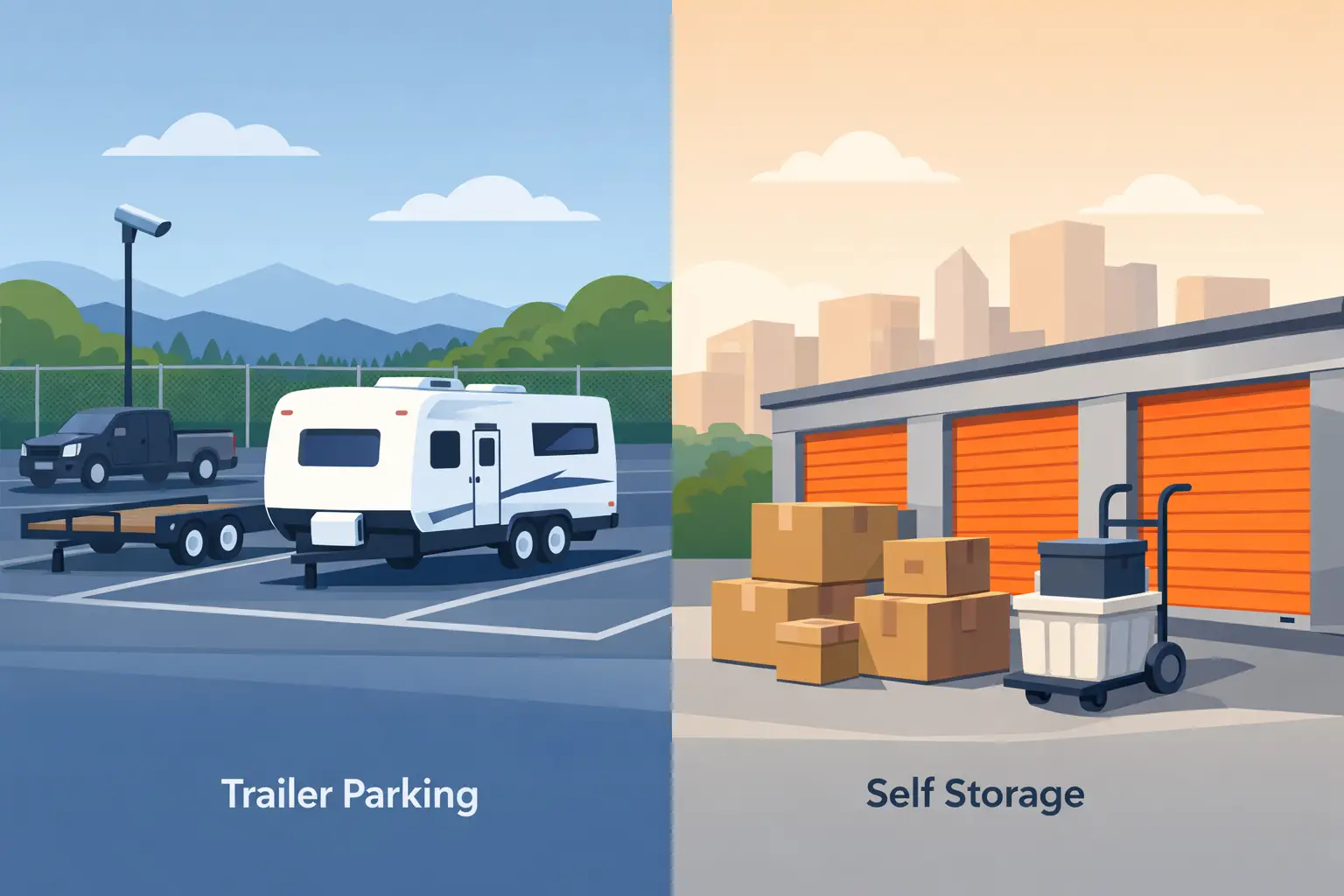
A lot of storage problems start with the wrong kind of space. If you're comparing trailer parking versus self storage, the real question is not just price. It is whether the property is built for a trailer, whether you can get to it when you need it, and whether your equipment will still be there in the same condition when you come back.
For commercial drivers, trailer owners, and equipment operators, that distinction matters. A standard self-storage facility may look convenient on paper, but many are designed around household goods, small business inventory, and passenger vehicles. Trailer parking is different. It is built around larger dimensions, easier entry and exit, and the basic reality that commercial equipment does not fit or move like a sedan or a box of office files.
Trailer parking versus self storage: what changes in real use
The biggest difference between trailer parking versus self storage is purpose. Self-storage properties are usually set up for enclosed units and general-use parking spaces, if they offer vehicle storage at all. Trailer parking facilities are built for trailers, trucks, and heavy equipment that need room to maneuver and a site that can handle oversized vehicles without creating problems at the gate, in the drive lanes, or at pickup.
That sounds simple, but it affects everything. If your trailer is parked at a facility that was not designed for commercial use, you may run into tight turns, access restrictions, unclear parking rules, or weight concerns. You can also end up in a situation where the site technically allows storage, but using it is a hassle every time you need to drop, hook, inspect, or move equipment.
A dedicated trailer parking lot is usually more practical because it is built with that use in mind. The value is not just a marked space. It is easier movement, fewer surprises, and a lower chance of being told after the fact that your trailer is too large, too long, or not permitted.
Access matters more than most people expect
Access hours are one of the first places where self storage can fall short for commercial users. Many self-storage sites have limited gate hours, office-hour restrictions, or rules that make after-hours entry difficult. That may work for someone picking up boxes on a weekend. It does not work well for an owner-operator or fleet user whose schedule depends on dispatch, route timing, or early and late pickups.
With trailer parking, 24/7 access is often the difference between a useful service and a wasted payment. If your load timing changes, if a trailer needs to be moved before daylight, or if you are returning from the road late, you need to know the gate is open to authorized users. Commercial schedules do not follow retail business hours.
That is why access should be treated as an operating requirement, not a bonus feature. If a facility cannot support the way your equipment is actually used, the lower monthly rate will not save you time or frustration.
Security is not the same at every property
People often assume any storage site is secure because it has a fence. In practice, security can vary a lot. Some self-storage locations are focused on indoor units first and vehicle storage second. That can leave trailer owners with a space on the edge of the property, limited lighting, or a layout that does not give much visibility around parked equipment.
A dedicated trailer parking facility is usually a better match when your concern is protecting a high-value trailer, truck, or piece of machinery. Gated entry, surveillance, lighting, and a layout designed around commercial assets make a difference. So does having a property where oversized vehicles are expected rather than treated like an exception.
This is especially important if your trailer carries tools, has specialized components, or represents a major part of your business income. Theft, tampering, and damage are not minor inconveniences when the equipment is tied directly to jobs and revenue.
Size and maneuverability can make the decision for you
Some trailer owners compare rates before they compare dimensions. That is backward. Before anything else, confirm that the site can physically handle your trailer.
A self-storage facility may advertise vehicle storage, but that can mean passenger cars, small campers, or short trailers. Even if your unit technically fits in a designated space, the approach lanes may be too tight for comfortable backing or turning. That creates risk every time you enter or leave the property.
Trailer parking facilities are usually a better fit because the site is laid out for commercial movement. Wider lanes, easier pull-through access in some cases, and room to line up properly save time and reduce the chance of avoidable damage. If you are handling longer trailers or equipment with awkward dimensions, this is not a small advantage. It is basic usability.
Cost depends on what you are really buying
At first glance, self storage can seem like the cheaper option. Sometimes it is. But the lower sticker price does not always mean lower real cost.
If you lose time fighting tight access, if you cannot retrieve your trailer when your schedule changes, or if you have to accept weaker security, you are paying in other ways. Delays, damage risk, and operational headaches all have a cost. For commercial users, the better question is whether the facility supports the job without creating extra work.
Trailer parking rates often reflect the fact that the site is built for larger vehicles and commercial use. That can mean better value even if the monthly number is higher. You are paying for fit, access, and conditions that actually support your equipment.
When self storage might still make sense
There are cases where self storage works. If you have a small utility trailer, if you rarely need access, and if the site clearly permits your trailer size and type, a self-storage property may be enough. The same goes for short-term situations where convenience is more important than long-term operational use.
But that only works when the fit is real, not assumed. You need to verify dimensions, gate hours, parking rules, and whether the facility is comfortable with commercial trailers. A lot of problems come from renters hearing "yes" to storage in general without getting clear answers about their specific unit.
For serious commercial users, those limitations usually show up fast. The bigger the trailer and the more often you move it, the more likely it is that a general storage property becomes inconvenient.
Who should choose dedicated trailer parking
If you run loads regularly, manage multiple trailers, store heavy equipment, or need dependable around-the-clock access, dedicated trailer parking is usually the better call. It is also the safer option when your equipment is oversized or too valuable to leave in a location that was not built with commercial storage in mind.
This is especially true in active corridors where legal, secure truck and trailer parking is hard to find. A dedicated site gives you more than a place to leave equipment. It gives you predictability. That matters when dispatch changes, jobs shift, or drivers need a storage solution they can trust without second-guessing the site every time they roll in.
In Gainesville, that need is familiar. Commercial users moving through North Texas or working locally need space that is secure, practical, and easy to reach from major routes. A facility like Truck Parking Gainesville is built around those basics - not around household storage trends or general public parking needs.
How to decide between trailer parking versus self storage
The fastest way to make the right call is to look at your actual use, not just the monthly fee. Ask whether the facility is designed for your trailer size, whether access is available when your schedule requires it, and whether the security measures match the value of what you are storing. Then think about maneuverability. If entering, backing, and pulling out feel difficult during a quick visit, it will not get better later.
A good storage choice should remove problems, not create them. For commercial trailers and equipment, that usually points toward dedicated parking rather than a general-use self-storage lot.
If your trailer supports your livelihood, treat storage like part of the operation. The right space should be secure, accessible, and built for the equipment you actually run. Anything less tends to cost more than it saves.