Choosing a Parking Space for Dump Trailers
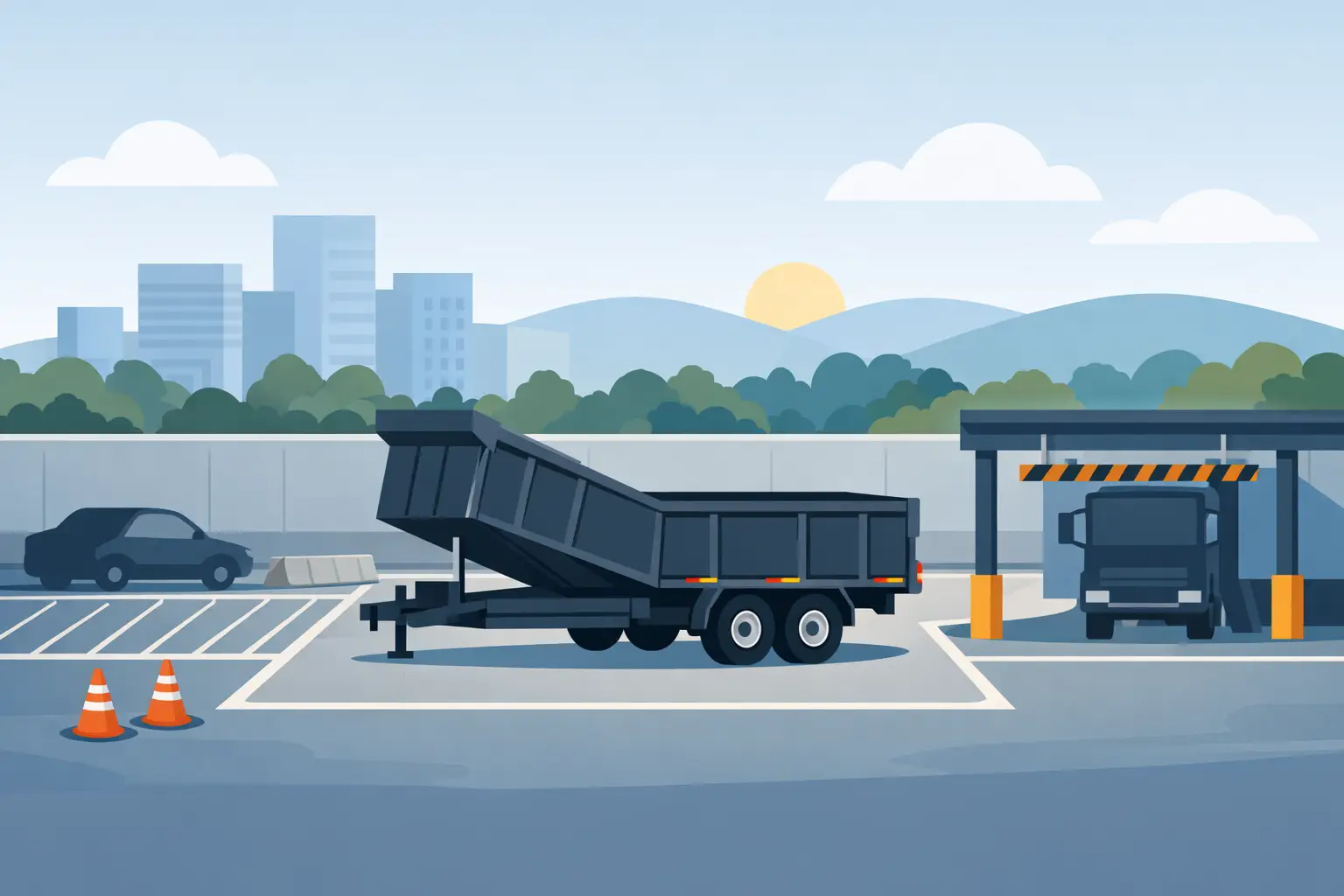
A dump trailer is not something you leave in an empty corner of a standard parking lot and hope it is still there tomorrow. Between its length, height, tongue clearance, hydraulic components, and replacement value, it needs a site built for commercial equipment. The right parking space for dump trailers gives you room to maneuver, dependable access when work starts early, and security that does not leave your equipment exposed.
For owner-operators, contractors, and small fleets around Gainesville, a proper parking arrangement can also keep the driveway clear, reduce neighborhood complaints, and prevent last-minute searches for a legal place to park. The goal is simple: your trailer should be secure, accessible, and ready when the next load is waiting.
Why Dump Trailers Need Dedicated Parking
Dump trailers work hard, and they take up more space than many people expect. A trailer may fit within a listed stall length, but that does not mean it can be backed in safely, turned around, coupled, or pulled out without blocking another vehicle. The tongue, ramps, raised sides, tarps, and equipment stored inside can all affect the room you need.
A general storage lot may allow trailers but still be a poor fit for commercial use. Tight drive aisles, limited gate hours, weak lighting, soft ground, and passenger-vehicle parking layouts create problems fast. Even if you can get in once, you need to be able to get out on a busy morning without a long series of difficult backing moves.
Security is another major concern. Dump trailers are valuable assets, and they often carry tools, tarps, ramps, spare tires, batteries, and other equipment that can attract theft. Leaving a trailer on a jobsite, roadside, vacant lot, or open property may seem convenient for a night or two, but it can create unnecessary exposure. A dedicated commercial parking facility gives the trailer a defined place to stay between jobs.
What a Parking Space for Dump Trailers Should Include
The best space depends on your trailer size, tow vehicle, work schedule, and how often you need access. Still, a few site features should be considered non-negotiable for most commercial users.
Room to Enter, Turn, and Back In
Do not judge a parking site only by the size of the individual space. Ask about the approach to the space and the width of the drive lanes. A long trailer needs room to swing during turns, especially when pulled by a full-size pickup, work truck, or tractor.
If you regularly arrive after dark or leave before sunrise, easy navigation matters even more. A layout that allows a clean pull-through or a manageable backing path can save time and reduce the risk of contact with gates, fencing, other trailers, or parked trucks.
Before reserving, provide the overall trailer length and identify whether you will park it attached to the truck. An attached truck-and-trailer combination requires more room than the trailer alone. If your trailer has a long tongue, rear ramps, or added toolboxes, include those in the measurement.
Controlled Access and Visible Security
A fence by itself is not enough. Look for gated entry, controlled access, lighting, and surveillance as part of the site’s security plan. These features help discourage unauthorized entry and make it easier to access your equipment with confidence.
No parking facility can eliminate every risk, and operators should still lock couplers, secure valuables, and carry appropriate insurance. But parking in a location designed for commercial vehicles is far more practical than relying on an unsecured lot or an informal arrangement. High-quality security starts with making it clear that the property is monitored, access is restricted, and equipment owners are expected to follow site rules.
24/7 Access That Matches the Workday
Hauling schedules do not always fall inside normal business hours. You may need to pick up a trailer before the crew arrives, return it after a long job, or move equipment over the weekend. A site with 24/7 access gives you flexibility without forcing your operation to fit someone else’s office schedule.
Confirm how access works before you reserve. Ask whether there are gate procedures, vehicle requirements, or restrictions on after-hours entry. You want access that is dependable, not a gate code that changes without notice or a process that leaves you waiting outside the property.
A Surface That Can Handle Commercial Equipment
The ground under a parked dump trailer matters. Uneven or soft surfaces can make parking difficult, affect trailer stability, and create problems after heavy rain. A commercial-ready parking area should provide a maintained surface and enough clearance to keep equipment from sitting in standing water or deep ruts.
You should also consider the condition of the landing gear, tires, and jack. If the trailer will sit for an extended period, use the proper supports and make sure the trailer is parked level. A slightly uneven spot may not matter for a quick stop, but it can become a bigger issue when the trailer stays in place for weeks or months.
Choose the Right Size Before You Arrive
One of the most common parking mistakes is reserving based on the trailer box alone. The listed body length is only part of the footprint. Measure the full length from the end of the tongue or coupler to the back of the trailer, including ramps when they are stored in the down position or extend beyond the rear.
Next, consider clearance on both sides. You need space to walk around the trailer for inspections, attach chains, check tires, secure a coupler lock, and connect the tow vehicle. A tight fit may cost less, but it can slow down every pickup and drop-off.
Height is also worth checking. Most open parking facilities will not have overhead clearance concerns, but entry gates, tree limbs, utility lines, covered areas, and neighboring equipment can create limitations. This is especially relevant for high-sided dump trailers or units with mounted tarps and toolboxes.
If you use a gooseneck or bumper-pull dump trailer, tell the facility which style you have. The turning path and truck positioning can differ significantly. A little detail up front helps ensure the reserved space actually works for your setup.
Short-Term Parking vs. Long-Term Storage
Short-term parking is useful when a trailer is between jobs, a jobsite has no secure overnight space, or you need a dependable place while moving through the Gainesville area. In this situation, fast access and an easy in-and-out layout are usually the main priorities.
Long-term storage requires a little more planning. You may want to inspect the trailer periodically, keep the battery maintained if applicable, protect the coupler, and remove high-value tools or materials. Make sure the parking arrangement allows you to access the unit as needed without complicated scheduling.
The right choice also depends on how frequently the trailer moves. A trailer used every day needs a space that supports quick departures. A seasonal unit may be better suited to a more economical long-term option, provided the site remains secure and accessible when work picks back up.
Ask These Questions Before Reserving
A parking provider should be able to answer straightforward operational questions without vague promises. Ask whether the site accepts dump trailers of your size, whether you can park with the tow vehicle attached, and whether the access lanes accommodate your turning needs. Confirm the hours of access, gate procedures, security features, and whether the surface is appropriate for your equipment.
It is also smart to ask about site rules. Parking is not the same as a work yard. A facility may allow storage but prohibit dumping loads, repairs, washing, extended idling, or material transfer on the property. Knowing those boundaries protects your access and helps keep the site safe for every customer.
Finally, verify the reservation terms before you pull in. Understand the payment schedule, notice requirements, assigned-space policy, and what information the facility needs about your trailer. Clear terms are a good sign that the operation is organized and prepared for commercial users.
Secure Trailer Parking in Gainesville
Gainesville sits near important regional travel routes, which makes dependable trailer parking valuable for local contractors and drivers moving equipment through North Texas. Instead of leaving a dump trailer where space happens to be available, use a site designed around oversized commercial vehicles and equipment.
Truck Parking Gainesville provides secure parking options for trucks, trailers, and machinery with gated entry, surveillance, lighting, and 24/7 access. That combination matters when your trailer is part of your daily operation, not just an extra vehicle sitting unused.
Your dump trailer earns its place on the job. Give it a parking space that protects the equipment, keeps it accessible, and lets you start the next workday without a parking problem already waiting for you.