How to Protect Parked Semi Trucks From Theft
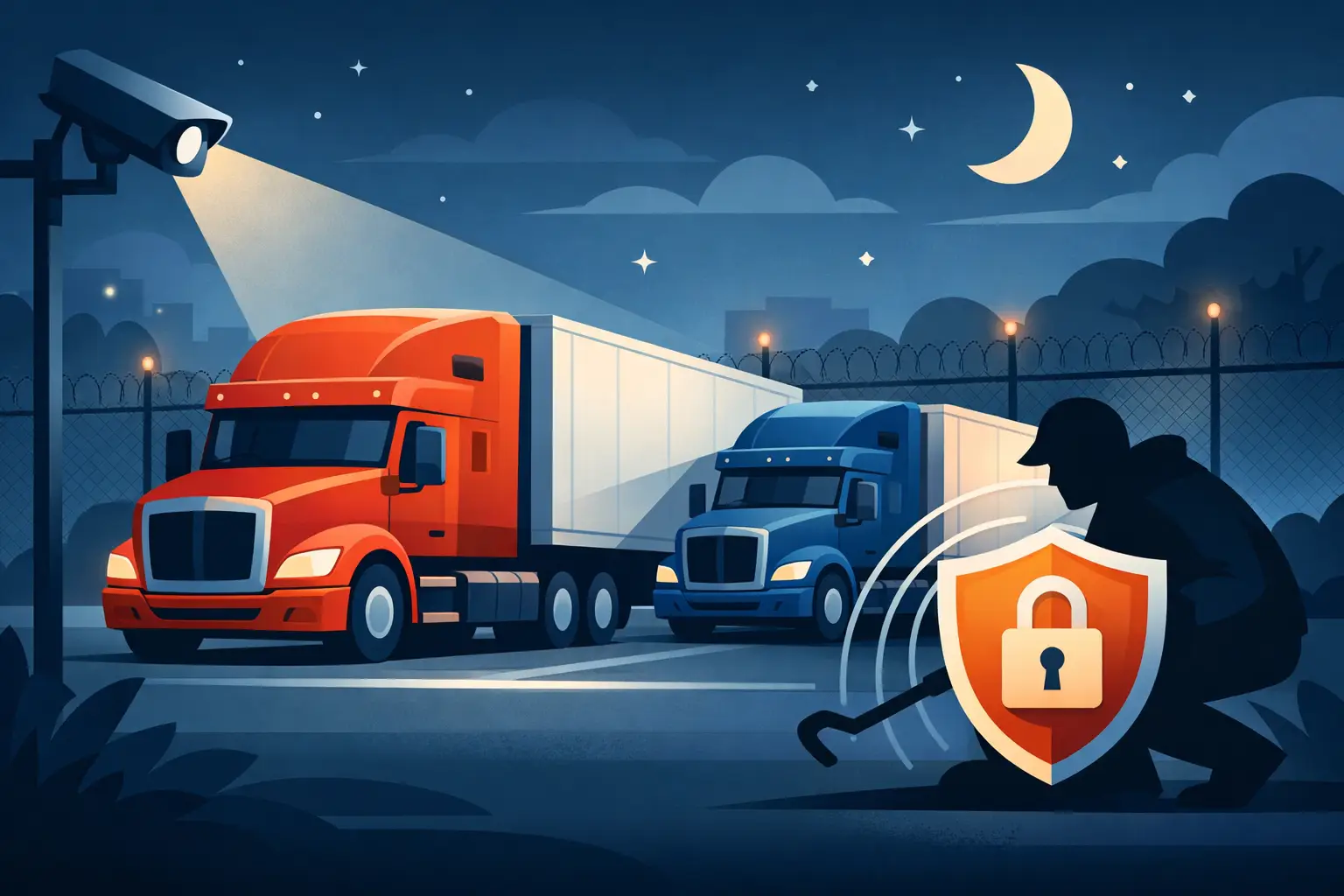
A parked truck can become an easy target in a matter of minutes. Fuel theft, cargo theft, battery theft, vandalism, and unauthorized entry all become more likely when a rig is left in an unlit lot, on a shoulder, or at a location with no controlled access. Knowing how to protect parked semi trucks starts with choosing where you park, then building a shutdown routine that does not leave obvious opportunities behind.
For an owner-operator, one incident can mean missed loads, expensive repairs, insurance headaches, and days off the road. For a small fleet, those costs multiply fast. Security is not about making a truck impossible to steal from. It is about making your truck, trailer, and equipment a harder target than the next available option.
Start With a Secure Parking Location
The safest security device is a well-managed place to park. A truck sitting alone behind an empty building may be legal for a few hours, but it gives thieves privacy and time. A busy public lot can provide more visibility, yet it may still offer little control over who comes and goes.
Look for commercial vehicle parking with gated entry, surveillance coverage, strong lighting, and 24/7 access for authorized users. Those features work together. A gate limits casual access. Cameras create a record and can discourage opportunistic theft. Lighting removes cover after dark. Around-the-clock access means drivers do not have to leave a truck in an unsecured location simply because they need an early departure or late arrival.
Parking close to major routes also matters. A secure space that is convenient to your route is easier to use consistently. If a lot is far out of the way, drivers may be tempted to make a last-minute stop somewhere less secure. Truck Parking Gainesville is built for oversized commercial vehicles, trailers, and equipment that need a dependable place to sit between runs.
What to Check Before You Commit to a Lot
Do not assume a “secure” lot is actually secure. Ask how entry is controlled, whether cameras cover the parking areas rather than only the office, and if the property is well lit where trucks and trailers are parked. Confirm that there is enough room to maneuver without leaving equipment near a fence line or isolated corner.
It also helps to understand who is allowed on the property. A location designed for trucks and equipment is generally a better fit than a general parking area where anyone can enter, walk around vehicles, or use the space as a shortcut. Security depends on day-to-day management, not just a sign on the gate.
Lock Down the Truck Before Walking Away
A good parking location does not replace driver habits. Each shutdown should include a quick, repeatable security check. It only takes a few minutes, and it can prevent the kind of oversight thieves look for.
Lock the cab, close windows fully, and remove keys from the vehicle. Do not leave registration documents, logbooks, load paperwork, portable electronics, cash, or personal bags in plain sight. If paperwork must stay in the truck, store it out of view. Cargo details and delivery addresses can be useful information for someone looking to target a load.
Check that trailer doors are closed and secured. A standard padlock may be better than nothing, but higher-value or theft-prone loads may call for a heavy-duty trailer door lock, a kingpin lock, or both. The right choice depends on the load, where the truck is parked, and how long it will be unattended. A high-security seal is useful for documenting tampering, but it is not a replacement for a physical lock.
For tractors parked without a trailer, consider a steering wheel lock, brake lock, or other visible anti-theft device. These tools are not foolproof, but visible deterrents can slow down an attempted theft and encourage a criminal to move on. For trailers parked separately, a kingpin lock is one of the most practical protections against an unauthorized hookup.
Protect Fuel, Batteries, and Other Easy Targets
Not every theft involves the whole truck. Diesel, batteries, catalytic converters, tools, and spare parts can all be targeted because they can be removed and sold quickly. These losses may be smaller than a stolen tractor or loaded trailer, but they can still stop a driver from making the next dispatch.
Fuel caps with locks can help reduce fuel theft, particularly when a truck will be parked overnight or for several days. If your truck has dual tanks, secure both. Park in a position that makes fuel access less convenient when possible, but do not block traffic lanes or create a safety issue just to do so.
Battery boxes should be locked or otherwise protected, especially on trucks that are parked for extended periods. If your equipment setup allows it, anti-theft brackets and protective cages can make batteries and other components harder to remove quickly. The same goes for auxiliary power units, generators, toolboxes, and exposed equipment mounted outside the cab.
Keep expensive tools out of exterior boxes if they will sit for long periods. A locked box is a delay, not a guarantee. For equipment with detachable attachments or loose accessories, inventory what is stored with the unit and secure removable pieces separately when practical.
Use Lighting, Cameras, and Visibility to Your Advantage
Thieves prefer time, darkness, and low visibility. Parking under good lighting and within camera range changes the risk calculation. If you are selecting a spot in a secure facility, avoid the farthest, darkest edge of the property when another option is available. Park where normal activity, lighting, and camera coverage are likely to be strongest.
Your own equipment can add another layer of awareness. GPS tracking on tractors, trailers, and high-value equipment can help locate an asset after an unauthorized move. Many systems also provide geofencing and movement alerts. These alerts are especially useful when a truck or trailer is parked over a weekend, during home time, or between seasonal jobs.
Dash cameras and cab cameras can be useful, but they should not be treated as the primary security plan. Cameras may record what happened, while controlled entry and physical locks can help prevent it. The best approach uses both prevention and documentation.
Inspect the Truck Before You Leave and Before You Roll
A short walk-around can reveal tampering before it becomes a bigger problem. Inspect after parking if you will be away for more than a brief stop, and inspect again before departure. Pay attention to trailer doors, seals, locks, fuel caps, battery boxes, air lines, electrical connections, and the area around the fifth wheel.
Watch for these warning signs:
- Damaged, missing, or freshly cut locks and seals
- Fuel caps that are loose, damaged, or missing
- Unfamiliar straps, devices, or wires near the tractor or trailer
- Signs that a trailer was moved, coupled, or accessed without authorization
- Broken glass, forced cab entry, or items disturbed inside the truck
If something does not look right, document it with photos before moving the truck or trailer. Notify the parking facility if you are on private property, then contact law enforcement and your dispatcher, fleet manager, or insurance provider as needed. Moving too quickly can make it harder to preserve useful details.
Build a Plan for Long-Term Parking
A truck parked for a single night has different needs than one stored for weeks or months. Long-term parking requires security, but it also requires maintenance. A secure location will not prevent battery drain, tire damage, fluid leaks, rodent activity, or weather-related wear.
For extended storage, remove valuables from the cab, secure the trailer and tractor with appropriate locks, and make sure tracking devices are charged and active. Consider battery maintenance based on your equipment and storage period. Check tire condition and air pressure, inspect for leaks, and visit the truck on a regular schedule if possible.
Tell a trusted person or fleet contact where the truck is parked and how to reach you if an alert comes through. For small fleets, maintain a simple record of each unit's location, parking date, trailer number, lock type, and inspection status. That record can save time when multiple drivers, trailers, or pieces of equipment are in storage.
Make Security Part of the Dispatch Decision
Parking security should be considered before the end of the driving day, not after hours are nearly exhausted. Drivers who wait until the last few minutes to find parking often have fewer safe choices. Dispatchers and fleet owners can help by planning secure stops into the route, especially when the load is high value or the truck will be unattended for an extended period.
There are trade-offs. A secure paid space may cost more than an informal stop, but the cost is often small compared with stolen fuel, a damaged trailer door, missed delivery time, or a stolen load. The right decision depends on the cargo, location, length of stay, and the equipment involved. Still, controlled commercial parking is usually the stronger choice when protecting valuable assets.
Before you shut down, take the extra few minutes to choose a secure space, lock the equipment, remove what does not belong in sight, and inspect the truck. That routine keeps your next departure focused on the road ahead, not on cleaning up a preventable loss.