Gated Parking vs Open Lots for Commercial Trucks
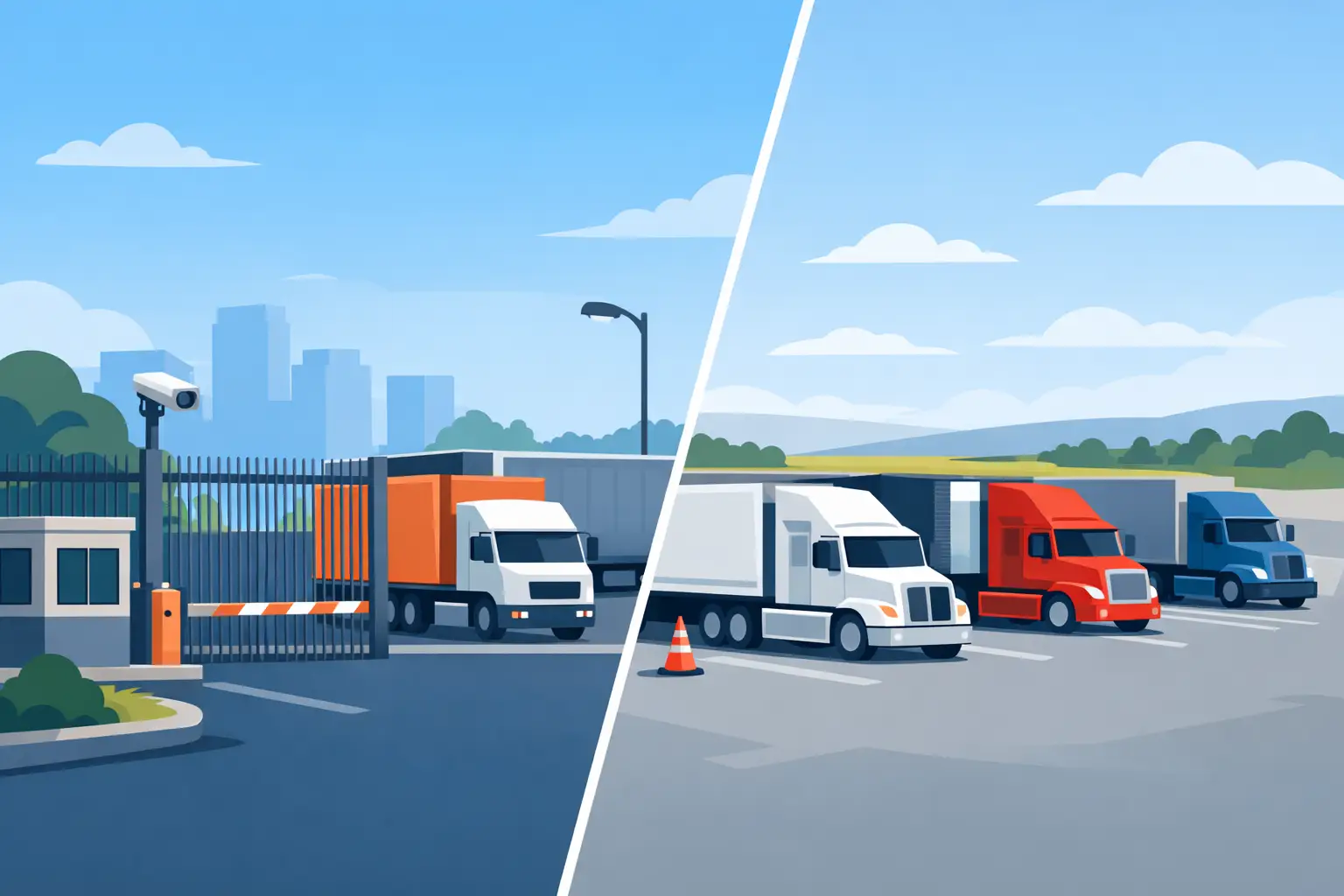
A truck, trailer, or piece of heavy equipment can be parked for the night and still create a problem for your business. The real question in gated parking vs open lots is not simply where there is an available space. It is whether that space protects your equipment, gives you dependable access, and works for the size of the vehicle you need to store.
For owner-operators, trailer owners, and small fleets around Gainesville, parking is an operating decision. A lower monthly rate means little if a site leaves your truck exposed, makes it difficult to maneuver, or locks you out when a load changes after hours. Here is how to compare the two options based on the details that affect your work.
Gated Parking vs Open Lots: The Main Difference
An open lot generally allows broad, unrestricted entry from a public road or a lightly controlled driveway. Some open lots are useful for temporary overflow parking, vacant-land storage, or low-value equipment. They can also be less expensive because the operator has fewer security systems and less site management to maintain.
Gated parking controls who enters the property. Entry may be managed through a gate, code, key, or another approved access method. At a commercial vehicle facility, the gate is typically part of a larger security plan that can include fencing, surveillance, lighting, and clearly defined parking areas.
The gate alone does not make a lot secure. A narrow gate, poor lighting, blind camera coverage, or inconsistent access policies can still leave problems. But a well-managed gated facility gives operators a layer of control that an open lot usually cannot provide. That matters when the asset behind the gate is a working truck, loaded trailer, specialized attachment, or expensive machine.
Security Is More Than a Fence
Open lots often have a basic advantage: they are easy to enter and exit. Unfortunately, that same convenience applies to people who have no business being near your equipment. Unauthorized visitors, illegal dumping, vandalism, fuel theft, stolen tools, and trailer break-ins are harder to prevent when a property is openly accessible.
A gated lot creates a clear boundary. It tells everyone entering the site that the property is monitored and managed. That visible deterrent can reduce casual trespassing before it becomes an incident. For equipment owners, the benefit is not just physical protection. It is also confidence that the truck or trailer is stored in a place designed to keep unauthorized traffic out.
Look beyond the word “secure” when evaluating any location. Ask whether the site has perimeter fencing, controlled entry, surveillance coverage, and adequate nighttime lighting. Check whether camera views cover entry points and parking rows rather than only a single front gate. If you are storing a trailer with tools, a truck that sits between runs, or machinery that cannot be moved quickly, those details deserve serious weight.
Security also affects the cost of downtime. A damaged lock, missing tool box, vandalized cab, or stolen component can delay a route and create insurance headaches. The cheapest parking space can become expensive fast when it adds avoidable risk.
Lighting Helps Drivers and Deters Problems
Good lighting has a practical job beyond security. Drivers need to see trailer connections, tires, obstacles, and surrounding vehicles when arriving before daylight or leaving late at night. Equipment operators need enough visibility to inspect a machine before transport.
A well-lit lot helps people move safely and makes suspicious activity more visible. In an unlit or poorly lit open lot, even a routine walkaround can become harder than it should be. For commercial users, that is not a small convenience issue. It is a safety and liability issue.
Access Must Match How You Work
Some drivers assume open lots are always easier because there is no gate to deal with. That can be true if the lot is truly accessible at all times and has enough room for oversized vehicles. But open access can also mean unpredictable conditions: blocked driveways, unauthorized vehicles in maneuvering areas, or no one accountable when another user parks carelessly.
A gated commercial lot should not force you to choose between security and availability. The right setup offers secure 24/7 access for approved customers. You can get in when dispatch changes the plan, when you return from a late delivery, or when an early start puts you on the road before normal business hours.
Before you commit, think through your actual schedule. Do you need to retrieve a trailer on a Sunday? Will another driver pick up equipment after midnight? Do you need to park a tractor and return later for a loaded trailer? If the answer is yes, verify exactly how after-hours entry works. A gate is an advantage only when authorized users can rely on it.
Space and Maneuverability Matter for Large Vehicles
A passenger-car storage lot may be gated, but that does not mean it is suitable for a tractor-trailer, flatbed, dump trailer, or heavy machine. Commercial parking needs room to turn, back, line up, and exit without squeezing past cars, poles, or poorly placed barriers.
Open lots can offer wide, flexible acreage, which may be useful for oversized or irregular equipment. The trade-off is that loosely organized open space can become difficult to use. Without marked areas or active management, parking positions can shrink, access lanes can disappear, and equipment can get boxed in.
A dedicated commercial vehicle facility should be planned around the dimensions and turning needs of trucks, trailers, and machinery. Look for clear drive lanes, practical entry and exit paths, and parking space that fits the equipment you are bringing. If you operate a long combination, ask about the approach from the road and whether there is enough room to turn without backing into traffic.
This is especially important for long-term storage. A site may feel workable when it is half full but become tight when every space is occupied. Reliable parking means you can enter and leave without hoping other users have left enough clearance.
Cost: Compare the Full Operating Expense
Open lots may advertise a lower rate, and for some situations that is the right choice. If you are storing noncritical equipment for a brief period, have limited security concerns, and can accept an unmonitored setting, basic open storage may meet the need.
For working commercial equipment, compare more than the monthly price. Consider the potential cost of theft, damage, difficult access, unsafe nighttime conditions, and time spent searching for an available place to park. Also consider whether the site is located near the routes you actually use. A cheaper lot that adds miles and deadhead time can cost more over a month than a conveniently located secured space.
Gated parking typically carries a higher operating standard, so it may cost more than bare open land. The value is in the control around your asset: defined access, a managed environment, visible security measures, and a location you can plan around. For a fleet, that consistency can make scheduling easier. For an owner-operator, it can mean coming off the road knowing where the truck will be parked.
When an Open Lot Can Still Make Sense
There is no single answer for every vehicle or every budget. An open lot may be reasonable when the equipment is lower risk, the storage period is short, the property has a trusted on-site presence, and you do not need regular nighttime access. It can also work when a job site needs temporary staging space and the equipment will be actively used every day.
The key is to be honest about the risk. If an open lot has no fence, poor lighting, no cameras, and unrestricted public access, treat it as a convenience option rather than protected storage. Do not assume a remote location is safer simply because it is quiet.
What to Check Before Reserving a Space
A quick site review can prevent a bad parking decision. Confirm that your exact truck, trailer, or machine will fit. Ask about gate access, hours, lighting, surveillance, turning room, and the procedure if you need help entering after hours. If you are storing a trailer separately from a tractor, make sure the layout allows for easy pickup without disrupting other customers.
Also confirm the reservation terms. A dependable facility should be clear about space availability, payment expectations, and what type of equipment it accepts. That clarity matters when you are coordinating drivers, dispatch, or seasonal equipment needs.
Truck Parking Gainesville is built around the requirements standard vehicle lots often miss: commercial-size space, gated entry, surveillance, lighting, and 24/7 access for trucks, trailers, and equipment. For drivers moving through the Gainesville area, a reserved space can be one less uncertainty at the end of a long run.
The right parking choice should make tomorrow easier. Choose a site where your equipment fits, your access is dependable, and your truck or trailer is not left exposed just because it is off the road.