Affordable Truck Parking Options That Work
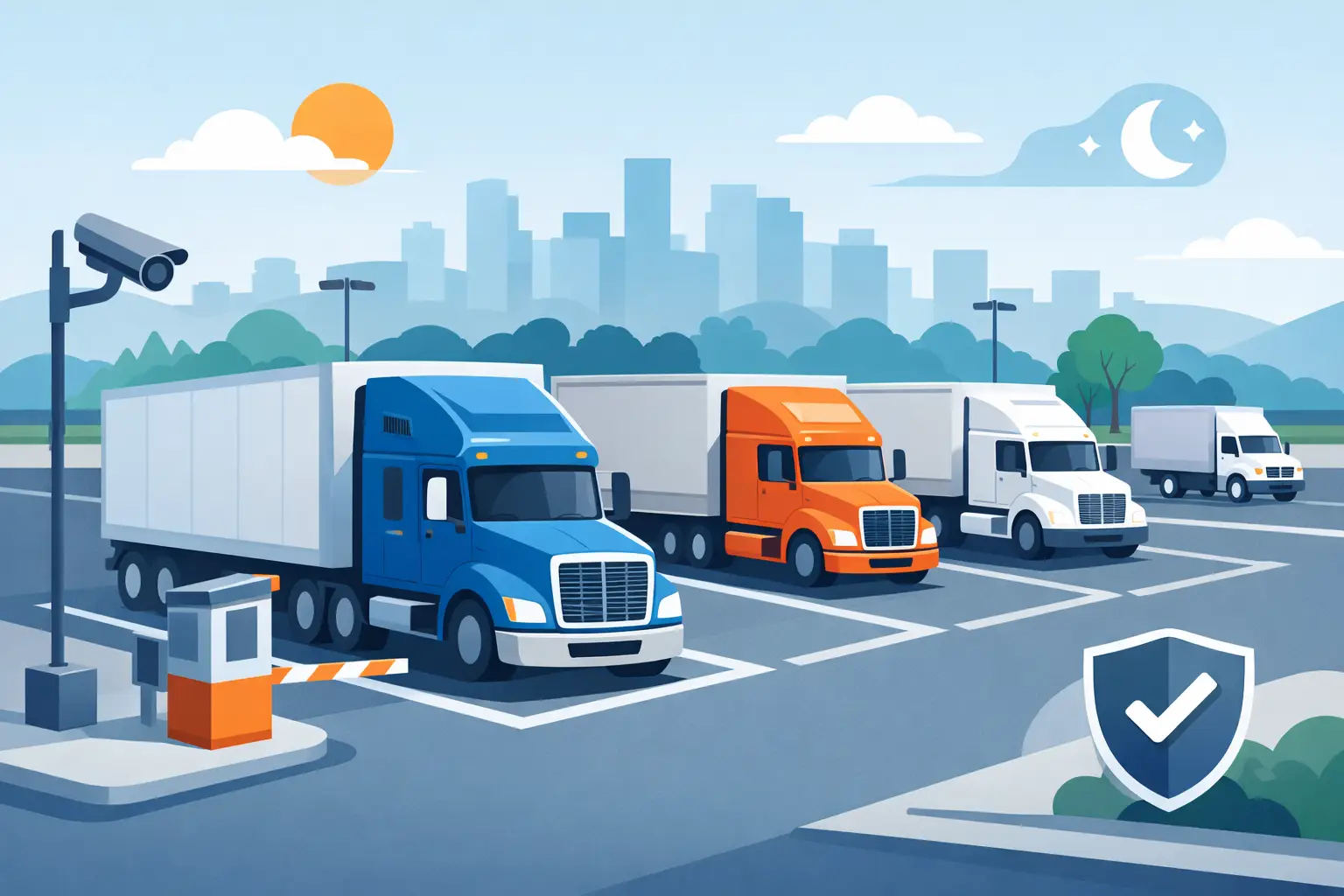
A cheap parking spot can get expensive fast if it leaves your truck, trailer, or equipment exposed. When drivers search for affordable truck parking options, the real question is not just monthly price. It is whether the space protects your rig, fits your schedule, and keeps you moving without added hassle.
That matters in places like Gainesville, where commercial drivers, trailer owners, and equipment operators need storage that works for oversized vehicles. A low rate on paper does not help much if the lot is hard to access, poorly lit, or not designed for commercial use. Good parking should save money without creating new risks.
What makes truck parking truly affordable
Affordable does not always mean lowest cost. It means the total value makes sense for the way you operate. If a lot has weak security, limited access hours, or space that is too tight for your equipment, the lower price can be misleading.
A dependable parking site reduces the chances of theft, vandalism, damage from poor layout, and wasted time getting in and out. For an owner-operator, one preventable issue can wipe out months of savings. For a small fleet, those costs multiply quickly.
That is why serious drivers usually compare parking based on three things: security, access, and fit. Price matters, but it only tells part of the story.
Common affordable truck parking options
There is no single best answer for every driver. The right choice depends on how often you park, what kind of vehicle or equipment you need to store, and how much risk you can afford to take.
Dedicated commercial truck parking lots
This is usually the most practical option for drivers who want predictable access and a site built for large vehicles. A dedicated truck parking facility is designed around the needs of commercial users, not passenger cars. That means better maneuvering room, more suitable spacing, and features that actually matter, such as gated entry, lighting, surveillance, and 24/7 access.
For many drivers, this is where affordability and reliability line up best. The monthly rate may be higher than an informal lot, but the site is more likely to protect your equipment and save time.
Shared industrial or yard space
Some drivers use extra space at industrial properties, contractor yards, or mixed-use storage areas. This can work if the owner understands commercial vehicle needs and the site is secure. The problem is consistency. Some of these spaces are well maintained and monitored. Others are little more than open ground with minimal oversight.
This option can be affordable, but it depends heavily on the property and the agreement. Before committing, drivers should confirm access hours, turning space, surface condition, and whether commercial vehicles are actually welcome long term.
Truck stops and short-stay paid parking
Truck stops can make sense for overnight use or occasional parking during a route. They are convenient, especially near highway corridors, and some paid spaces are a better bet than circling for an open spot late at night.
Still, they are rarely the best value for long-term storage. Fees add up quickly, availability can be inconsistent, and the setting is built around temporary stops rather than secure vehicle storage.
Informal parking arrangements
Some drivers try to save money by parking at unused lots, vacant properties, or through word-of-mouth arrangements. This is where cheap can become expensive in a hurry. If the site is not secure, clearly permitted, or suitable for oversized vehicles, you are taking on more risk than the price suggests.
There can also be legal and operational problems. Local restrictions, towing issues, poor lighting, and uncertain access make informal parking a weak long-term strategy for most commercial users.
How to compare affordable truck parking options
The fastest way to make a bad parking decision is to compare price alone. A better approach is to look at what you are getting for that rate.
Security should be obvious
If a lot claims to be secure, there should be visible proof. Gated entry, perimeter control, surveillance cameras, and good lighting are basic signs that the site takes vehicle protection seriously. If those features are missing, the lower rate is carrying more risk.
This is especially important for trailers, equipment, and trucks that may sit for days or weeks at a time. The longer an asset stays parked, the more security matters.
Access has to match your schedule
Commercial work does not always happen during business hours. If you leave early, return late, or need to pull equipment on short notice, restricted access can create real problems. A facility with 24/7 access gives drivers flexibility that is worth paying for.
That is part of affordability too. Time lost waiting on a gate schedule or dealing with limited entry is still a cost.
The lot has to fit commercial vehicles
Not every storage site is truly built for trucks, trailers, or machinery. Some lots advertise vehicle storage but are really better suited for cars, RVs, or small business overflow. Oversized vehicles need room to enter, turn, stage, and park safely.
If the site is too tight or poorly laid out, you increase the chances of damage and frustration. A proper commercial lot is easier to use, especially if you park often.
Location affects cost more than people think
A slightly higher monthly rate in a highway-friendly location may save money over time. Less deadhead driving, faster pickup access, and easier route planning all have value. The cheapest lot on the map is not always the cheapest lot to operate from.
For drivers moving through North Texas, convenience near major travel routes can make a measurable difference in time and fuel.
When lower-cost parking stops being a good deal
There is always a point where lower price starts cutting into reliability. Usually, the warning signs are easy to spot. Poor lighting, inconsistent gate control, unclear rules, and a surface not suited for heavy vehicles all suggest the lot is built to hit a price point, not support commercial use.
Another red flag is uncertainty. If you are not sure whether your trailer will fit, whether your equipment can be accessed when needed, or whether the property is actively monitored, the parking is not really solving your problem. It is just postponing it.
For owner-operators and small fleets, dependable parking is part of protecting revenue. A stolen trailer, damaged equipment, or missed dispatch costs far more than a reasonable monthly rate at a secure facility.
What Gainesville-area drivers should prioritize
In and around Gainesville, a good parking option needs to do more than hold a vehicle. It should support real working schedules and real equipment. That means easy highway access, enough room for oversized units, and security features that are visible from the moment you pull in.
Drivers storing trucks, trailers, or heavy equipment should also think about duration. If you need parking for more than a night or two, consistency matters. You want a site where the rules are clear, the access is reliable, and the setup does not change from week to week.
That is where a dedicated facility often makes the most sense. Truck Parking Gainesville serves this market with a straightforward approach built around what commercial users actually need: secure parking, 24/7 access, and space designed for trucks, trailers, and equipment rather than general storage traffic.
Choosing the right balance of cost and protection
The best affordable truck parking options are the ones that let you park with confidence and get back on the road without complications. For some drivers, that means short-term parking close to a route. For others, it means long-term storage with dependable security and access every day of the week.
It depends on what you are parking and how often you need it. A day cab, a loaded trailer, and a piece of heavy machinery do not all carry the same exposure or need the same kind of site. But the standard is the same across the board: the lot should be secure, practical, and priced fairly for commercial use.
If a parking option saves a few dollars but creates uncertainty, it is not doing its job. The better move is to choose a place that respects the value of your equipment and the reality of your schedule. When parking works the way it should, it stops being a daily problem and becomes one less thing you have to worry about.